
NW Structural & Shoring — Since 1974
Pin Pile Installation in Seattle
Engineer-designed pin piles carry your home’s load down to soil that will hold it — the underpinning method Seattle formally recognizes, installed by crews who work in crawl spaces and tight corners other outfits cannot reach.
When you need this
Settling or sinking structure
When part of a house drops, pin piles carry its load past the soft layer to ground that will hold.
Soft or filled ground
Homes built on fill, peat, or soft outwash need deeper support than shallow footings can provide.
Sloping or slide-prone lots
Piles anchor structures on hillsides and back up retaining and stabilization work.
New loads on old footings
Additions and second stories often need underpinning before the existing foundation can take the weight.
Why Seattle homes need it
Old houses, wet ground
Seattle formally recognizes pin piles for underpinning — SDCI Director’s Rule 10-2009 spells out how they are designed and installed. That is no accident: the region’s glacial till makes an excellent bearing layer, and piles driven to refusal in it carry serious loads. Above the till, though, sits everything from soft outwash to old fill, so depths vary block to block — commonly 15 to 40 feet, and up to about 75 feet in soft soils. It is the underpinning method built for this city’s ground.
Our approach
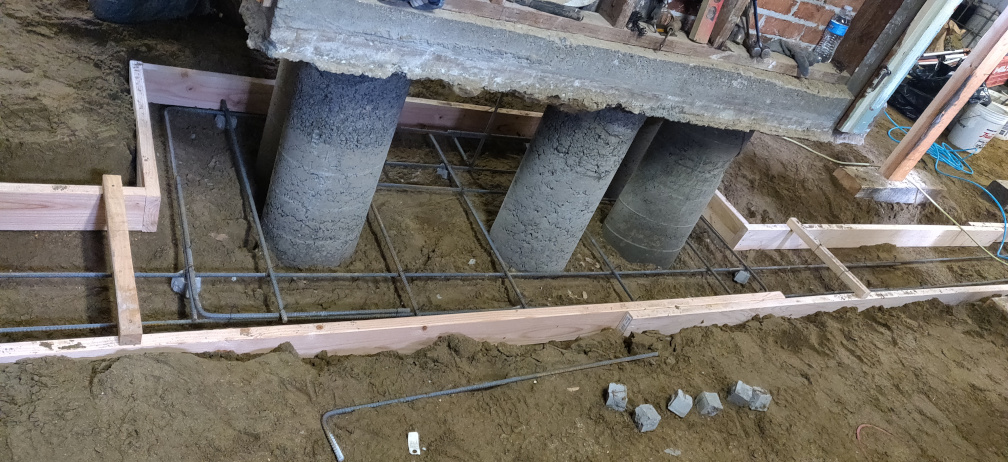
Pin piles are small-diameter steel pipe piles driven to refusal with excavator-mounted or handheld hammers. The equipment is compact and the vibration low, which lets us work inside crawl spaces, tight side yards, and close quarters where drill rigs and larger machines simply do not fit.
Every layout is engineer-stamped: pile locations, target capacities, and connection details are designed before we drive the first pile, and driving records document that each pile reached refusal. The result is underpinning you can hand to an inspector, a buyer, or a lender with confidence.
How it works
1
Site visit & estimate
Free and no pressure. We walk the site, listen, and give you a straight assessment with a written estimate.
2
Engineering & permits
We handle the structural engineering and the SDCI or county paperwork so your project starts on solid footing.
3
Lift / shore / build
Our crews do the structural work — homes stay habitable during most projects.
4
Final inspection & sign-off
Work is inspected, documented, and signed off before we call the job done.
Related services
Hillside Stabilization
Stop slides and secure steep slopes with engineered walls, piles, and drainage.
→Straight Answers
What are pin piles?
Small-diameter steel pipe piles driven to load-bearing soil to support or re-level a structure.
How deep do pin piles go?
To refusal — commonly 15–40 ft, up to ~75 ft in soft soils.
How do pin piles compare to helical piers?
Both underpin; pin piles excel in tight access and Seattle’s till, and are recognized by SDCI’s Director’s Rule 10-2009.
Will pin pile installation damage my house?
No — installation is low-vibration and works in crawl spaces and close quarters.
Get a straight answer about your house
Free site visit, honest assessment, written estimate — often the same day you call. Ask for Jeff.